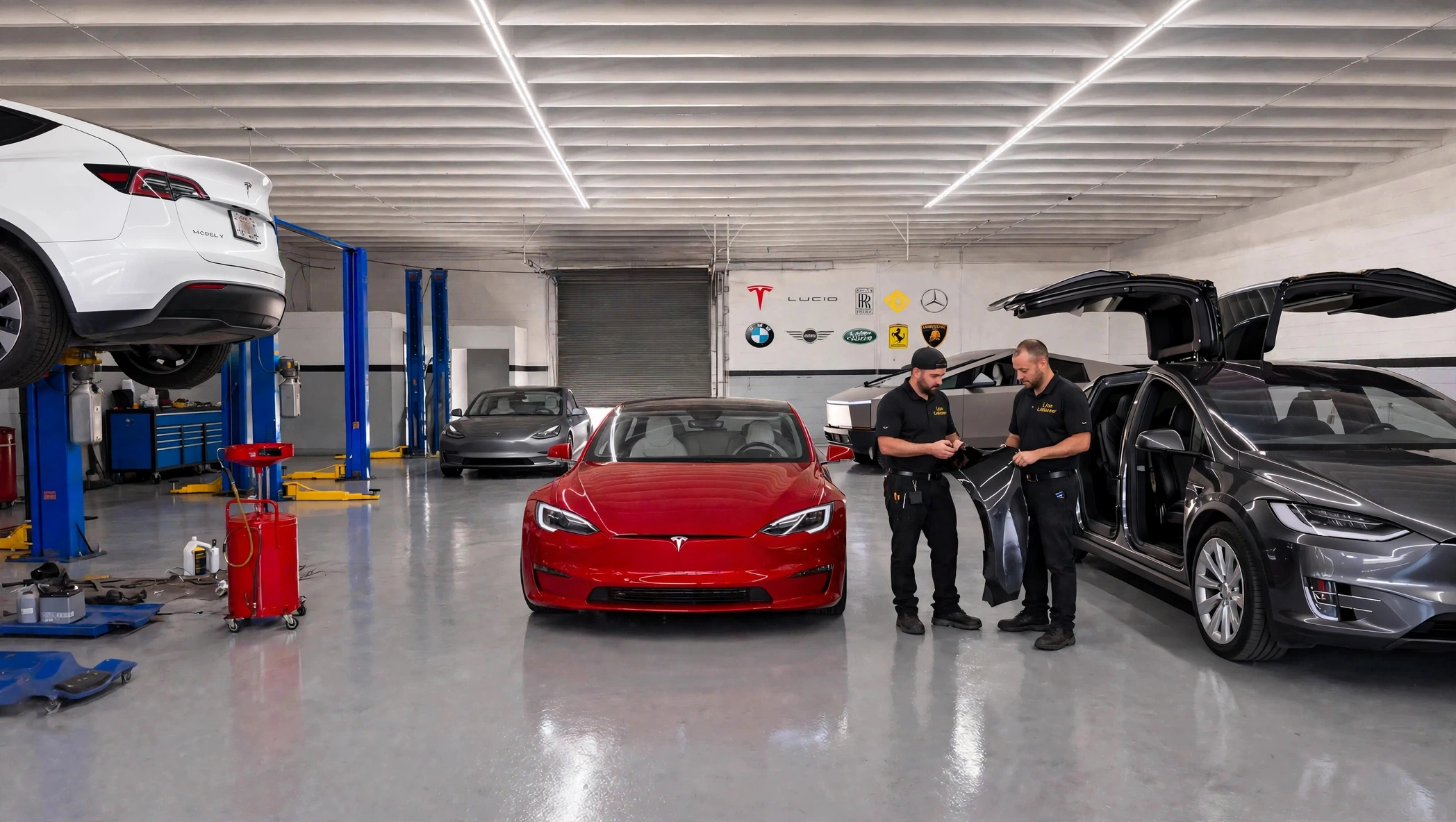
Tesla Body Shop in Miami & Hollywood, FL
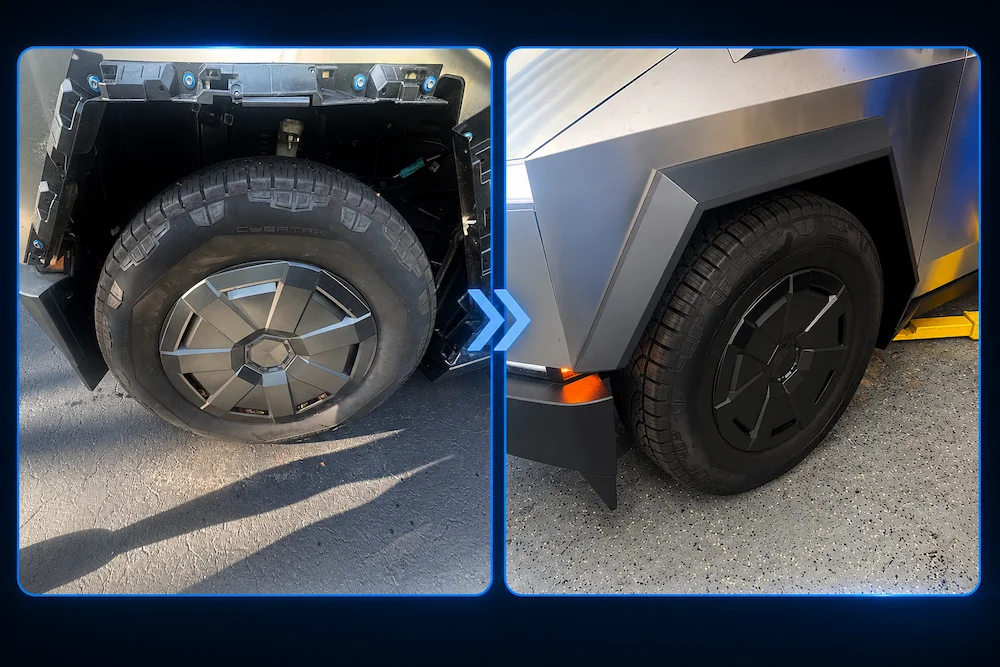
Lion Collision Center is an independent Tesla specialist body shop at 810 N Dixie Hwy Ste B in Hollywood, minutes from Aventura and a straight drive down I-95 from Miami and Fort Lauderdale. We repair Model 3, Model Y, Model S, Model X and Cybertruck after collisions of every size — from parking-lot door damage to structural repairs — following factory repair procedures, with high-voltage safety handled in-house and every sensor and camera calibrated before the car goes home.
Lion Collision Center · 810 N Dixie Hwy Ste B, Hollywood, FL 33020 · Mon–Fri 8:30am–6:30pm, Sat 10:30am–3:30pm
Why Tesla bodywork is a specialty, not a sideline
A Tesla is not a steel sedan with a battery added. The body mixes aluminum castings, extruded aluminum rails, high-strength steel and bonded panels, and the structure is part of the safety system that protects the battery pack underneath the floor. Repairing it like a conventional car — pulling a casting that should be replaced, or sectioning where the factory procedure forbids it — can leave the car weaker in the next impact and can trigger fault codes that only show up weeks later.
Our technicians work on Teslas every week, so the model-specific steps are routine here: powering the car down correctly, checking the pyro fuse and contactors, measuring the structure against factory dimensions, and documenting every replaced structural part with photos your insurer can verify. That is the difference between a repair that looks right and a repair that is right.
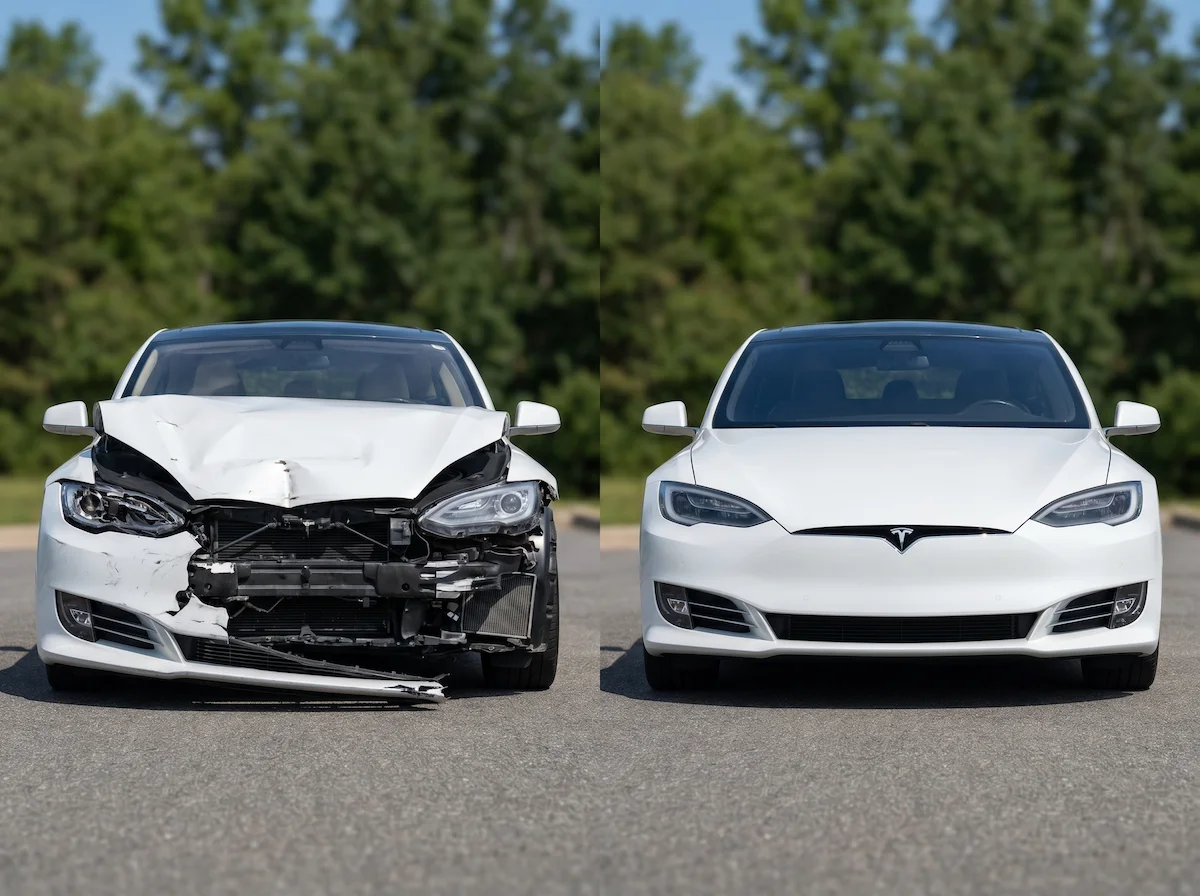
From bent bumpers to bent structure: what we fix on Teslas
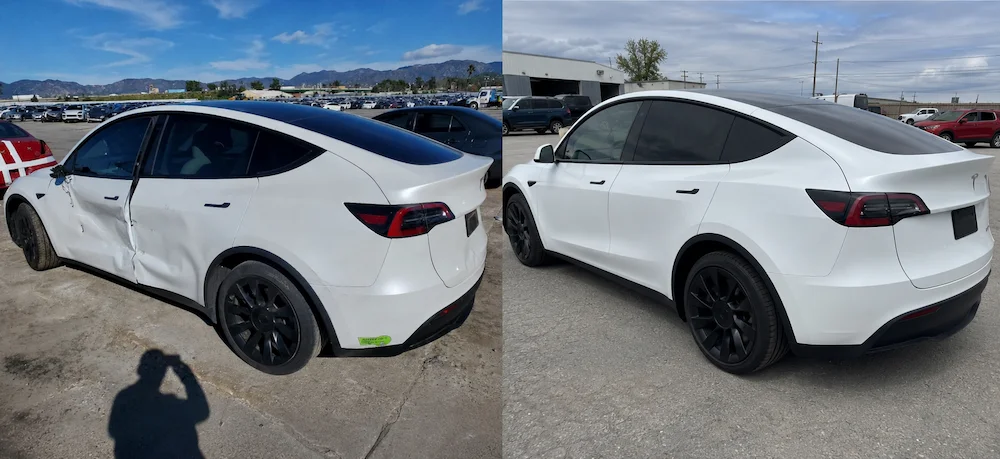
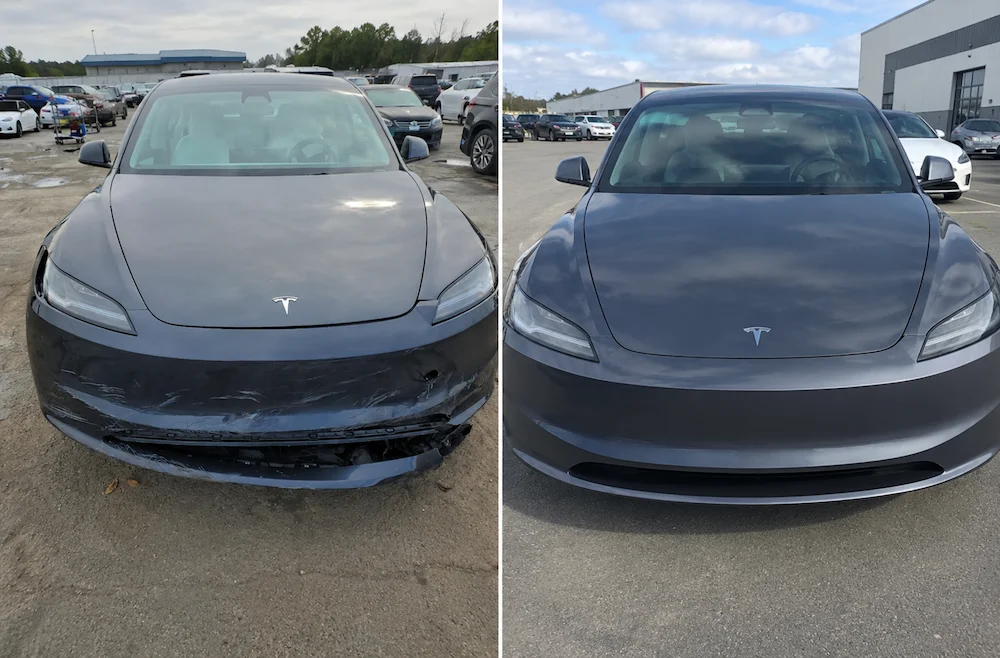
Most Tesla work starts with the hits South Florida traffic delivers: rear-end taps on I-95 that crush the rear body panel and trunk floor, front impacts that take out the frunk tub, headlights and the radar-and-camera array behind the bumper, and side swipes that crease doors and quarter panels. Because so much of a Tesla's skin is aluminum, dents that would be simple steel repairs need aluminum-specific straightening, dedicated tools kept separate from steel work to avoid contamination, and refinishing that matches Tesla's factory paint codes.
Heavier collisions get a full structural path: teardown and blueprinting first, so hidden damage is measured and photographed before we quote, then replacement of damaged castings and rails with new parts, bonding and riveting to factory specification, corrosion protection, and a final measuring report. If the battery enclosure itself is damaged, we inspect the pack shield and mounting points and coordinate any battery work before body repairs proceed.
High-voltage safety comes before the first bolt
Every Tesla that enters the shop is treated as a live high-voltage system until it is proven safe. We follow the model's disable procedure — disconnecting the first responder loop and the 12V (or 16V low-voltage) system in the correct order, verifying isolation, and keeping the car in a safe state while structural and paint work is done. Technicians use insulated tools around orange-cabled components, and no welding, cutting or heating happens near the pack without the area cleared first.
When the repair is finished, reconnection is just as deliberate: systems are powered up in sequence, software and firmware status is checked, charging is tested, and the car is scanned again so a stored fault does not become your problem on the drive home to Miami or Pembroke Pines.
Cameras, radar and Autopilot: calibration is part of the repair
A Tesla sees the road through windshield cameras, fender and B-pillar cameras, ultrasonic sensors and, on many cars, radar. Replacing a windshield, a bumper, a fender or even a mirror can move a camera by millimetres — enough for Autopilot, lane keeping and parking features to misjudge distances. That is why calibration is not an upsell at Lion Collision; it is a standard line on every Tesla estimate where a sensor, camera, windshield or suspension part was disturbed.
We run pre- and post-repair scans on every Tesla, perform the required static and dynamic calibrations, and road-test the car so driver-assistance features behave the way they did before the accident. You get the scan reports with your final paperwork.
Your insurer, your shop: Florida law is on your side
After a crash, insurers often steer owners toward their network shops. In Florida, the choice of repair shop belongs to the vehicle owner — you can have your Tesla repaired where you trust the work, and your insurer must work with that shop. We write a complete, photo-documented estimate, submit supplements when teardown reveals hidden damage, and argue the factory procedure line by line so the repair is paid as a proper Tesla repair, not as the cheapest generic version of it.
Drivers come to us from Miami, Fort Lauderdale, Aventura, Hallandale Beach, Pembroke Pines, Miramar, Dania Beach and Sunny Isles Beach because we handle the paperwork fight for them: claim setup, rental coordination, deductible guidance and diminished-value documentation after major repairs. Start with a free written estimate — call +1 754-219-3388 or send photos on WhatsApp.
Tesla & EV collision work at our Hollywood shop
Common questions
Do I have to use the body shop my insurance company recommends?
No. In Florida you have the legal right to choose your repair shop. Tell your insurer you are using Lion Collision Center and we will handle estimates, supplements and documentation directly with the adjuster.
Can you repair Tesla aluminum body panels?
Yes. We use aluminum-dedicated tools and procedures for Tesla's aluminum and mixed-material bodies, including bonded and riveted structural parts replaced to factory specification.
Will my Autopilot cameras work after the repair?
Yes — that is the point of post-repair calibration. We scan the car before and after, calibrate cameras and sensors that were disturbed, and road-test driver-assistance features before delivery.
How long does a Tesla collision repair take?
It depends on damage and parts availability. Minor repairs can take days; structural work takes longer. We give you a written timeline after teardown and update you as parts arrive.
Related repair pages
Start with a free written estimate
Send photos of the damage or bring the car to 810 N Dixie Hwy Ste B in Hollywood. We document everything for your insurer and explain the repair plan before any work begins.